
Tactical Flashlight User Interface
A flashlight’s user interface sets a tactical flashlight apart from the non-tactical variety. A user interface is the method by which the operator of a device controls its functionality. This refers to the manner of turning the light on and off and changing modes of operation.
A tactical flashlight MUST:
- Provide reliable control when the operator is under high stress and in adverse conditions.
- Provide simple and intuitive operation when the user is mentally, emotionally, and physiologically overloaded.
- Be exceedingly simple in its operation and extremely robust in its design.
Human reaction time increases greatly as options increase, so when regulating more than one function, the functions should be separated into binary controls to keep things as simple as possible. The simplest user interface is binary, providing only two options (e.g., On or Off, High or Low).
Imagine a car with only one foot pedal (press once to accelerate, press three times and hold to brake!)

Obviously, a one-pedal car is unrealistic and dangerous, yet many “tactical” flashlights on the market use an equally inappropriate user interface. Multi-click operation is commonly marketed as “tactical” although using a single button to control not only On/Off, but multiple mode selection as well. Failing to incorporate binary operation and failing to decouple various functions renders these flashlights wholly unsuited for tactical operations.
Multi-click user interfaces are exceedingly common, not because they perform well, but because they are cheap to manufacture.
All LED flashlights contain a “driver” circuit. This circuit can be programmed to provide as many modes as desired without adding any cost to production. A manufacturer can add strobe, variable output, SOS, disco, programmability, or any number of gimmicks absolutely free so long as one button controls everything.
As many can attest, what looks impressive in the showroom does not play so well in the field.
When bullets are flying and adrenaline is pumping, scrolling through a menu of various modes with a single flashlight button seldom provides the desired outcome. In life-and-death situations, the result can be catastrophic and tragic. Tactical controls are no place to cut costs.
Other flashlights use a selector ring or other switching mechanism to choose the desired mode. While this solution may achieve decoupled operation (separating On/Off from mode selection), such systems are generally not binary and also demand precise adjustment to obtain the desired mode. Additionally, such systems often require two hands to operate (clearly undesirable in a tactical situation).
The unique Tailcaps of Elzetta exemplify proper tactical decoupled binary interfaces.
The best-selling Elzetta High/Low Tailcap, as its name implies, provides High and Low output modes. Selection of the mode is achieved by rotation of the Tailcap. If the Tailcap is completely screwed on, High output is engaged; always. Low mode is engaged simply by loosening the Tailcap anywhere from a few degrees to ¼ turn (no precise adjustment is required). On/Off is achieved via the pushbutton, which is the pushbutton’s only function.
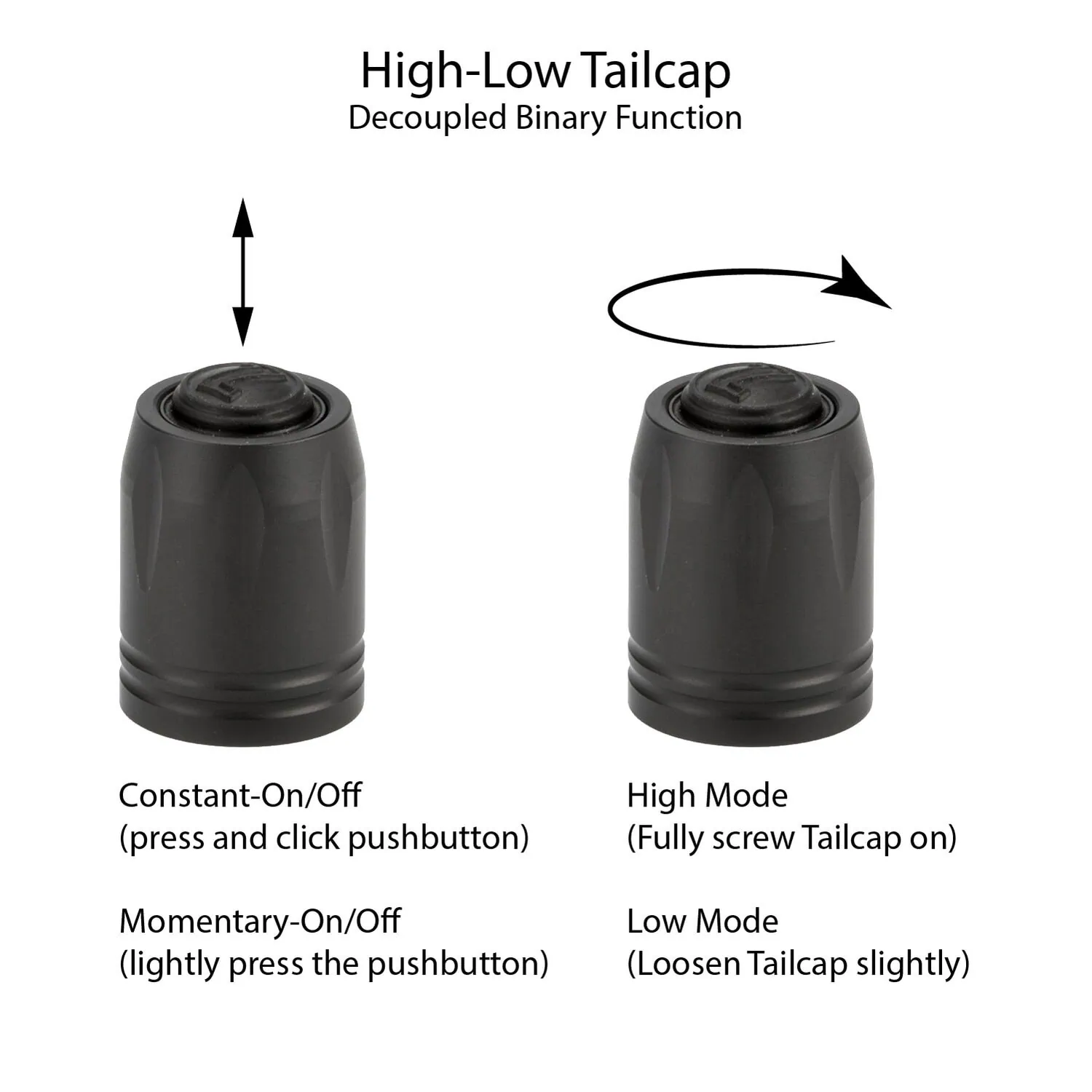
The system is binary (only High and Low are available) and decoupled (On/Off is completely separate from mode selection). This enables the operator to achieve the desired mode every time, never inadvertently engaging the wrong mode by cycling the On/Off pushbutton. It also allows mode selection to be changed whether the flashlight is On or Off. The simple elegance of this system provides intuitive operation with one hand under high stress.
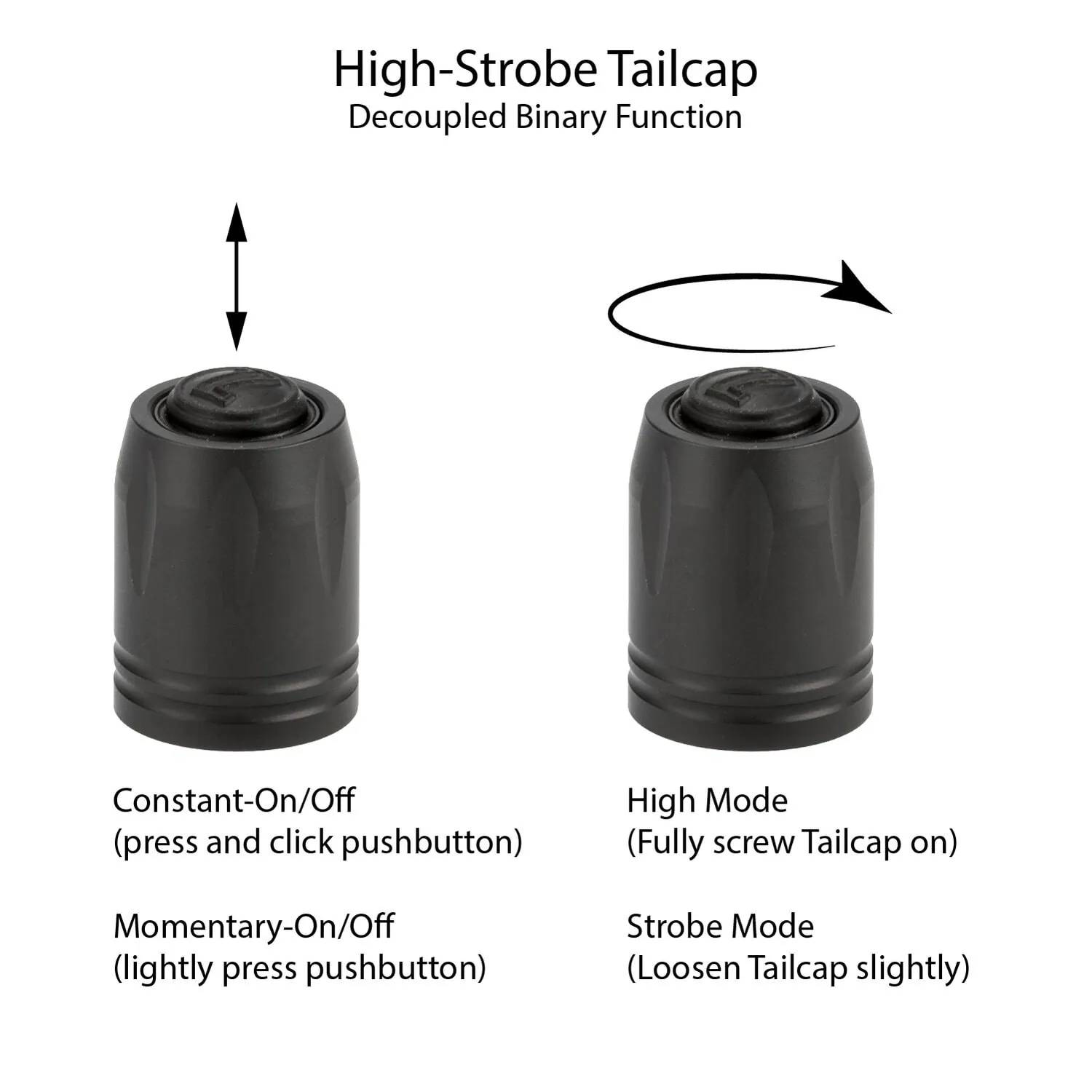
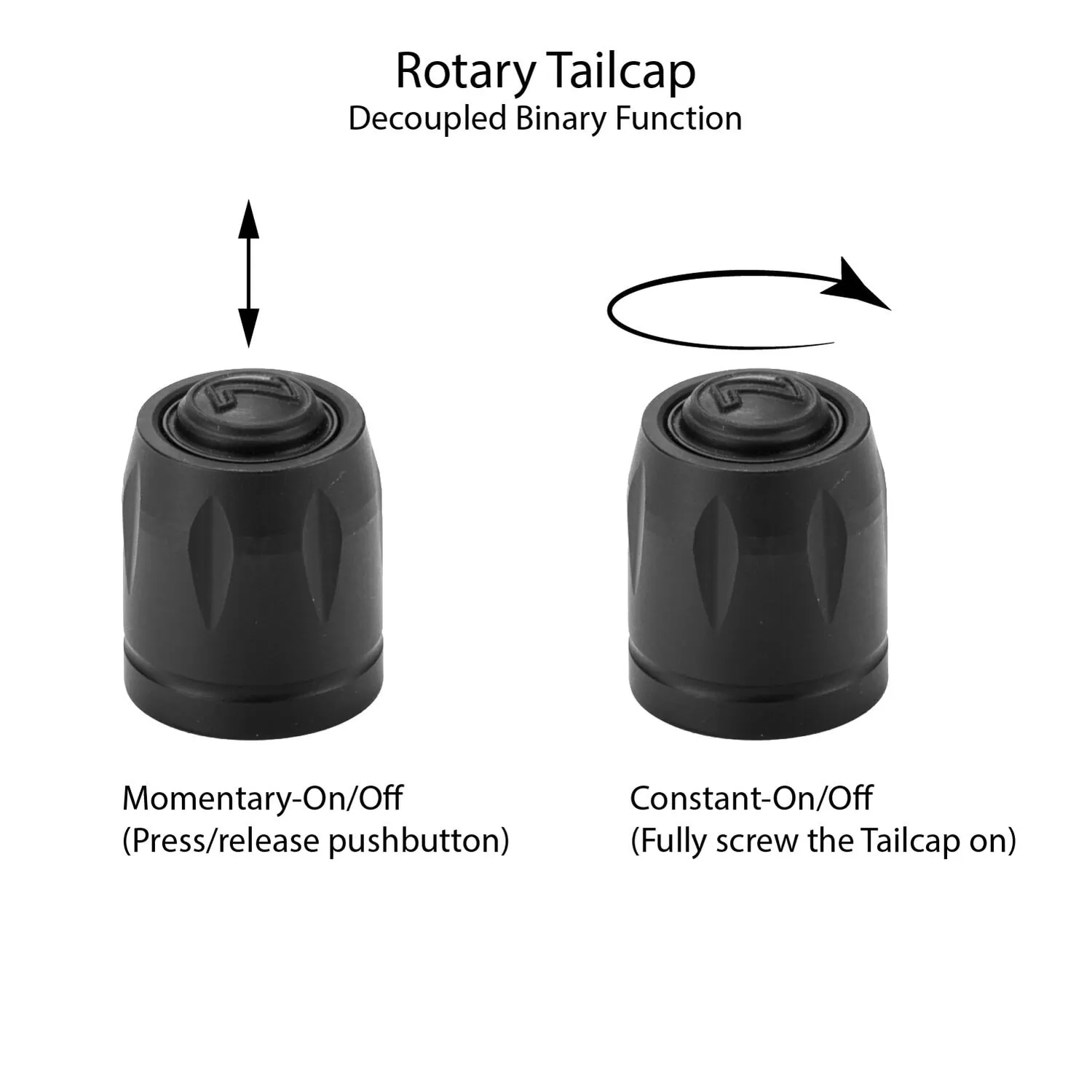
The Elzetta High/Strobe Tailcap functions identically with a high-frequency Strobe mode replacing the Low mode. The Elzetta Rotary Tailcap takes decoupling even further and separates Momentary-On/Off (activated by the pushbutton) from Constant-On/Off (achieved by fully screwing the Tailcap on). Elzetta Remote Tape Switches work similar to the Rotary Tailcap with a tethered pressure pad replacing the pushbutton.
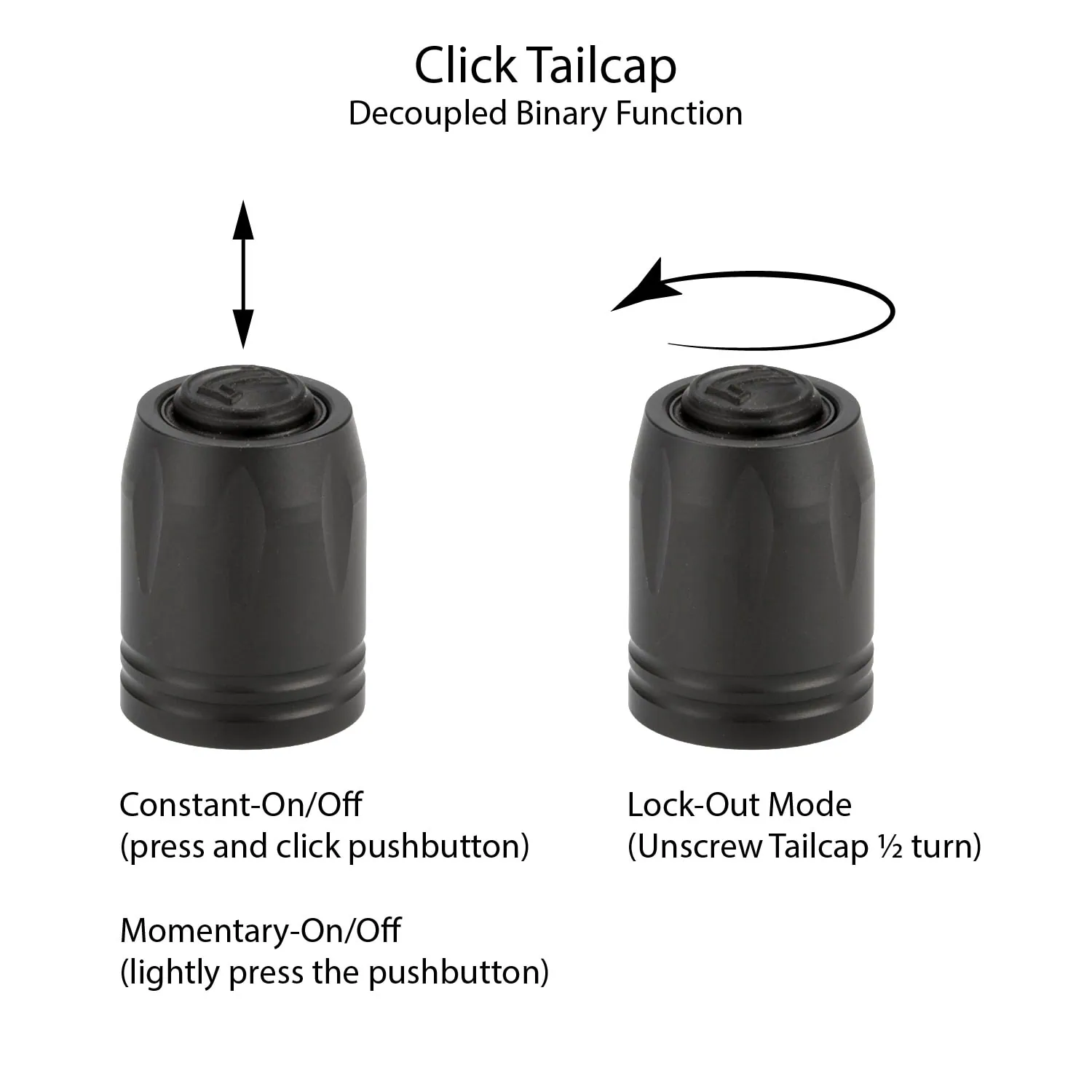
See our video on tactical user interfaces below:
Popular products
-
 Rotary Tailcap $39.60
 -
 Limited Edition 2025 Charlie C132-LE25 Original price was: $309.00.$209.00Current price is: $209.00.
 -
 Bravo 2-Cell Flashlight Holster ZH2-LE $54.95
 -
 Elzetta Rifle Illumination Kit From: Original price was: $277.15.$221.72Current price is: $221.72.